

When a loved one needs addiction treatment, one of the first decisions a family may face is choosing the appropriate level of care. Should the person remain at home while attending scheduled treatment sessions, or would it be more beneficial to temporarily live in a residential treatment setting?
There is no universal answer. The right level of care depends on the individual’s substance use, mental health, medical needs, home environment, responsibilities, recovery history, and ability to remain engaged in treatment outside of a structured setting.
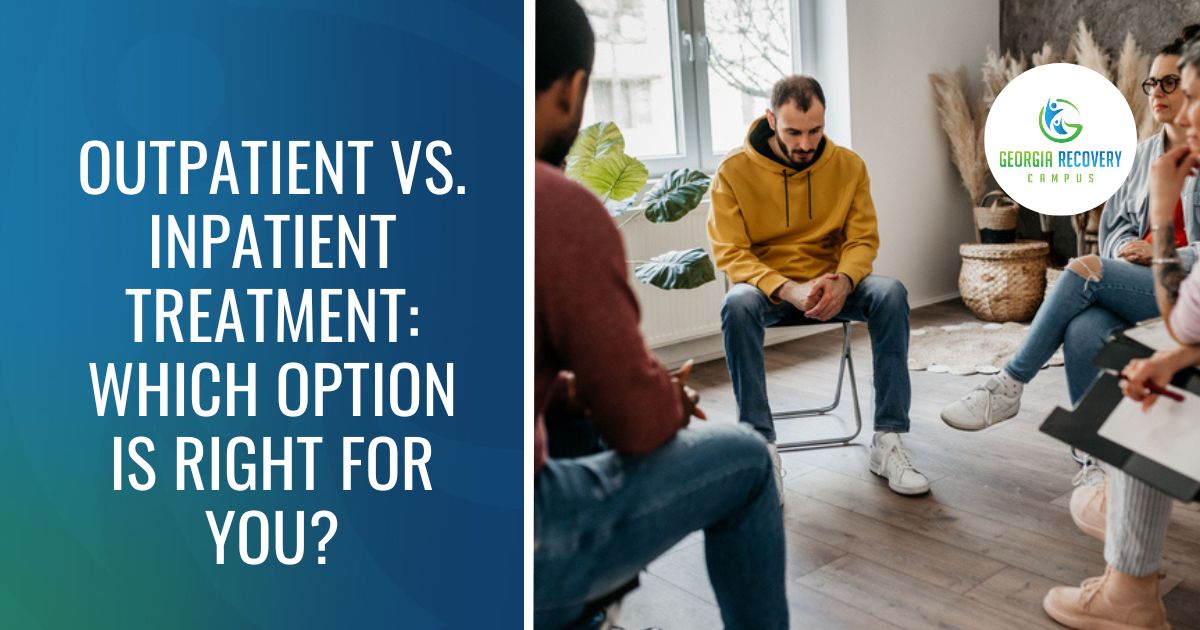
For some Georgia families, residential treatment can provide the concentrated support their loved one needs. For others, outpatient treatment may offer an appropriate balance between recovery and everyday responsibilities. Understanding the distinction can help families have a more productive conversation with a treatment provider.
Residential Treatment Provides a Structured Environment
Residential treatment allows a person to live at a treatment facility while participating in a structured recovery program. Instead of leaving treatment each day and returning immediately to the same routines, responsibilities, and environmental pressures, the individual has an opportunity to focus more fully on recovery.
At Georgia Recovery Campus, residential treatment includes individualized care, therapy, group sessions, family counseling, educational activities, wellness opportunities, and access to support throughout the day. The program is designed to address more than substance use alone and can incorporate treatment for co-occurring mental health concerns. (Georgia Recovery Campus)
That structure can be particularly important when a person has difficulty maintaining recovery in an unsupervised environment. A residential setting can create space between the individual and some of the routines or circumstances that have made recovery difficult.
Residential treatment can also provide consistency. Instead of trying to coordinate appointments and recovery activities around work, school, family responsibilities, or other obligations, treatment becomes the primary focus throughout the program.
Outpatient Treatment Allows More Independence
Outpatient care takes a different approach. Rather than living at the treatment facility, individuals attend scheduled treatment sessions and return home afterward.
Georgia Recovery Campus offers outpatient levels of care, including partial hospitalization programs and intensive outpatient programs. These programs provide structured treatment while allowing participants to maintain more of their everyday responsibilities. (Georgia Recovery Campus)
For someone with a stable, supportive home environment, outpatient treatment may be an effective way to continue receiving professional care while gradually applying recovery skills in everyday life.
However, flexibility can also create challenges. A person must be able to remain committed to treatment while managing distractions, responsibilities, and stressors outside the treatment setting.
Families Should Consider the Home Environment
One of the most important questions is not simply, “How severe is the addiction?” Families should also consider, “What happens when this person leaves treatment each day?”
A supportive home environment can make outpatient care more manageable. On the other hand, ongoing conflict, instability, significant stress, limited support, or other circumstances that make recovery difficult may influence a provider’s recommendation.
This does not mean families should try to determine the appropriate level of care on their own. A professional assessment can help identify the level of structure and clinical support that makes sense for the individual’s circumstances.
Mental Health Concerns May Affect the Decision
Addiction and mental health concerns can overlap in complicated ways. Someone may be dealing with anxiety, depression, trauma, mood symptoms, or another mental health concern at the same time as a substance use disorder.
When both issues are present, it can be important to select a program that can address them together. Georgia Recovery Campus provides dual diagnosis treatment designed to address substance use and co-occurring mental health concerns within an integrated treatment plan. (Georgia Recovery Campus)
For some individuals, having mental health and addiction services coordinated within the same treatment environment may provide a more consistent approach to recovery.
The Goal Is the Appropriate Level of Support
Choosing residential treatment does not mean someone has failed at recovery. Choosing outpatient treatment does not mean someone is taking recovery less seriously.
These are different levels of care designed for different circumstances.
The more useful question is whether the program provides the amount of structure, professional support, accountability, and flexibility the individual needs at that point in the recovery process.
Families do not have to make this decision based solely on assumptions or comparisons with someone else’s experience. A qualified treatment provider can evaluate the individual’s circumstances and discuss available options.
How Georgia Recovery Campus Can Help
Choosing treatment is an important decision, and families may have questions about detox, residential care, outpatient treatment, mental health services, or dual diagnosis treatment.
Georgia Recovery Campus provides personalized addiction and mental health treatment designed around each person’s needs and goals. If you are considering treatment for yourself or someone you love, contact the firm at (478) 216-1110 to learn more about available levels of care and how to get started.

.2502241118369.jpg)
.2502241131352.jpg)